Ever wondered how those amazing video games come to life? It’s not magic, folks! It’s the power of game development software. From pixelated 2D adventures to breathtaking 3D worlds, the software we’ll explore today is the backbone of the entire gaming industry. We’ll delve into the different types of software, compare industry giants like Unity and Unreal Engine, and even peek behind the curtain at the challenges of creating online multiplayer experiences.
Get ready for a thrilling journey into the heart of game creation!
This exploration will cover everything from choosing the right engine for your project, understanding the crucial features like animation and physics, to navigating the complexities of online game development, including monetization strategies and the ethical considerations involved. We’ll also look at the fascinating intersection of game development with other industries, like online casinos, and the unique challenges they present.
Types of Game Development Software
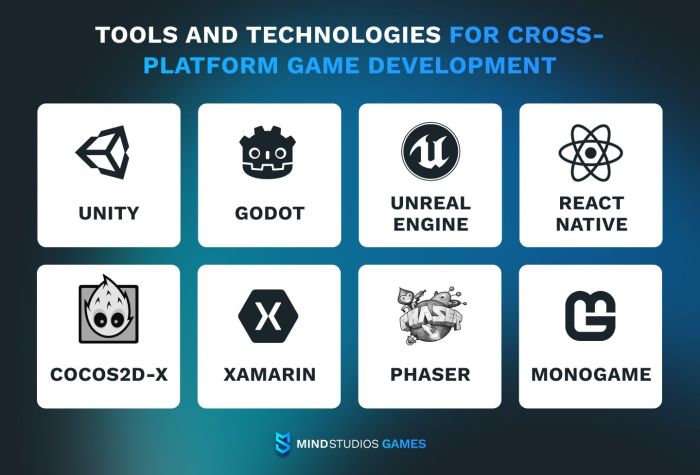
Choosing the right game development software is crucial for bringing your game vision to life. The vast landscape of available tools can be overwhelming, so understanding the different types and their capabilities is key to making an informed decision. This section will explore various game development software options, categorized by their functionalities and target platforms.
Game Engine Categorization: 2D vs. 3D
Game engines are the core software used to create games. They provide a framework for developing the game’s mechanics, graphics, and overall functionality. They are broadly categorized into 2D and 3D engines, though some offer capabilities in both.
| Category | Software Name | Description | Key Features |
|---|---|---|---|
| 2D Game Engine | GameMaker Studio 2 | A popular choice for beginners and experienced developers alike, known for its ease of use and powerful scripting language (GML). | Drag-and-drop interface, GML scripting, cross-platform deployment, robust community support. |
| 2D Game Engine | Construct 3 | A visual scripting engine that allows for rapid prototyping and development of 2D games, ideal for those without extensive programming experience. | Event-based system, intuitive interface, HTML5 export, extensive marketplace for assets. |
| 3D Game Engine | Unity | A highly versatile and widely used engine supporting both 2D and 3D game development, boasting a large community and extensive asset store. | Cross-platform compatibility, C# scripting, powerful physics engine, extensive documentation and tutorials. |
| 3D Game Engine | Unreal Engine | Known for its high-fidelity graphics and powerful features, often preferred for AAA game development and visually stunning projects. | Blueprint visual scripting, C++ scripting, advanced rendering capabilities, robust animation tools. |
| 2D/3D Game Engine | Godot Engine | A free and open-source engine suitable for both 2D and 3D game development, offering a flexible and lightweight approach. | GDScript, C#, C++ support, node-based visual scripting, excellent performance. |
Comparison of Popular Game Engines
Unity, Unreal Engine, and Godot are three of the most popular game engines, each with its own strengths and weaknesses.
| Feature | Unity | Unreal Engine | Godot |
|---|---|---|---|
| Ease of Use | Relatively easy to learn, especially for beginners. Large community support provides ample resources. | Steeper learning curve, particularly for beginners unfamiliar with C++. Blueprint visual scripting helps mitigate this. | User-friendly interface and intuitive GDScript make it accessible to beginners. |
| Graphics Capabilities | Excellent graphics capabilities, suitable for a wide range of projects. | Industry-leading graphics capabilities, ideal for high-fidelity projects. | Capable of producing high-quality graphics, though not as advanced as Unreal Engine. |
| Performance | Generally good performance, though can be optimized further depending on project complexity. | Excellent performance, optimized for high-end projects. | Very good performance, particularly impressive given its open-source nature and lightweight design. |
| Pricing | Free for personal and small-scale projects; paid licenses for professional use. | Free to use, with a royalty share on commercial projects exceeding a certain revenue threshold. | Completely free and open-source. |
| Best Suited For | Wide range of genres, especially mobile and indie games. | AAA titles, high-fidelity games, and projects requiring advanced rendering. | Indie games, 2D games, and projects where open-source and flexibility are priorities. |
Pricing Models of Game Development Software
Different software packages utilize various pricing models to cater to diverse user needs and budgets.
| Software | Pricing Model |
|---|---|
| Unity | Free (personal use), Subscription (professional use) |
| Unreal Engine | Free (royalty based on revenue) |
| Godot Engine | Free and Open Source |
| GameMaker Studio 2 | One-time purchase (various tiers) |
| Construct 3 | Subscription (various tiers) |
Game Development Software Features
Creating compelling games requires powerful tools. Game development software packages are more than just code editors; they’re comprehensive suites designed to streamline every stage of the game development lifecycle. From initial concept to final polish, these tools provide the features necessary to bring your game vision to life. Let’s explore the essential components that make a robust game development software package truly stand out.
Scripting Capabilities
Robust scripting is fundamental. A powerful scripting language allows developers to control game logic, character behavior, and interactions with the game world. Popular languages include C#, C++, Lua, and Blueprint (Unreal Engine’s visual scripting system). These languages offer varying levels of flexibility and control, allowing developers to choose the best fit for their project’s complexity and team expertise.
For example, C++ provides high performance but requires a steeper learning curve, while Lua offers a gentler introduction for beginners. The ability to integrate external libraries and extend the engine’s functionality through custom scripts is also a significant advantage.
Animation Tools
Bringing characters and objects to life requires sophisticated animation tools. A good game engine provides features for creating and manipulating animations, including keyframe animation, skeletal animation, and procedural animation. Keyframe animation allows precise control over movement and poses, while skeletal animation provides realistic character movement by animating a character’s skeleton. Procedural animation, on the other hand, utilizes algorithms to generate animations dynamically, offering greater flexibility for complex simulations or large-scale environments.
For example, realistic cloth simulation or the movement of crowds would benefit greatly from procedural animation.
Physics Engine Integration
Realistic physics are crucial for creating immersive and believable game worlds. A well-integrated physics engine simulates physical interactions such as gravity, collisions, and forces. This allows for realistic character movement, object interactions, and environmental effects. Engines often offer options to adjust the parameters of the physics engine, allowing developers to fine-tune the realism or create stylized physics effects.
For instance, a platformer might use less realistic physics for exaggerated jumps, while a realistic racing simulator would require precise physics for accurate car handling.
Sound Design and Implementation
Sound is a critical element of game immersion. Good game development software provides tools for integrating and manipulating audio assets. This includes importing various audio formats, creating spatial audio effects, and managing sound playback. Features such as sound mixing, reverb, and other audio effects allow for the creation of rich and dynamic soundscapes. Consider the difference between a simple gunshot sound and a gunshot with realistic reverb and echo, enhancing the feeling of immersion in the game world.
Level Editing Tools
Creating engaging game environments requires intuitive level editing tools. These tools allow developers to design and build game levels using a visual interface. Features include placing objects, manipulating terrain, setting up lighting, and defining player paths. Efficient level editing tools significantly accelerate the development process, enabling developers to quickly iterate on level designs and experiment with different layouts.
The use of brushes and tools for painting textures and manipulating heightmaps are common features that allow for creating complex and visually appealing game worlds.
Integrated Debugging Tools
Debugging is an essential part of game development. Robust debugging tools are crucial for identifying and resolving errors quickly and efficiently. Features include breakpoints, stepping through code, variable inspection, and memory profiling. Common debugging techniques include using print statements to track variable values, setting breakpoints to pause execution at specific points in the code, and using memory profilers to identify memory leaks.
For instance, a breakpoint set at a point where a character’s health drops to zero would help track down bugs in the combat system.
Asset Store Functionality: A Step-by-Step Guide (Using Unity as an example)
The Unity Asset Store provides a vast library of pre-made assets. Importing and implementing these assets can significantly speed up development.
- Access the Asset Store: Open the Unity Editor and navigate to the Asset Store window (Window > Asset Store).
- Search for Assets: Use the search bar to find the desired assets (e.g., character models, sound effects, environment textures).
- Import Assets: Select the desired asset and click “Import.” Unity will download and import the asset into your project.
- Locate Assets: The imported assets will be located in the Project window within the “Assets” folder.
- Implement Assets: Drag and drop the assets into your scene. Configure their properties as needed (e.g., position, rotation, scale).
For example, importing a pre-made character model would involve dragging the model from the Project window into the Scene view, then adjusting its position and animation settings within the Inspector panel. Similarly, importing a sound effect would involve dragging the audio file into the scene and assigning it to a game object.
Online Game Development Platforms and Tools
Stepping into the world of online game development opens doors to collaborative efforts and streamlined workflows. Cloud-based platforms offer a range of features that significantly impact the development process, from version control to real-time collaboration, making them a compelling alternative to traditional, locally installed software. This section will delve into the specifics of popular online platforms, comparing their strengths and weaknesses, and exploring the advantages and disadvantages of cloud-based development versus local installations.
Comparison of Online Collaborative Game Development Platforms
Several online platforms cater to collaborative game development, each with its unique strengths and weaknesses. Choosing the right platform depends on the project’s size, team structure, and specific needs. The following comparison focuses on key features like version control, real-time collaboration, and communication tools.
| Platform | Version Control | Real-time Collaboration | Communication Tools | Strengths | Weaknesses |
|---|---|---|---|---|---|
| GitHub (with appropriate game development tools integrated) | Git-based, robust branching and merging | Limited direct real-time collaboration within the code editor; relies on external tools | Issue tracking, pull requests, discussions | Excellent for version control, large teams, open-source projects; strong community support. | Requires familiarity with Git; real-time collaboration is less seamless than dedicated platforms. |
| Google Cloud Platform (with integrated tools like Firebase) | Integrated version control options available depending on the chosen services. | Real-time collaboration possible through integrated tools and services. | Various communication options depending on chosen tools (e.g., chat, email integration). | Scalability, strong infrastructure, integration with other Google services. | Can be complex to set up and manage, cost can escalate quickly depending on usage. |
| AWS (with integrated tools like AWS Amplify) | Similar to GCP, offers integrated version control options depending on the chosen services. | Real-time collaboration possible through integrated tools and services. | Various communication options depending on chosen tools (e.g., chat, email integration). | Scalability, robust infrastructure, wide range of services. | Steeper learning curve than some other platforms, cost can be significant depending on usage. |
Advantages and Disadvantages of Cloud-Based vs. Locally Installed Game Development Services
The choice between cloud-based and locally installed game development software involves weighing several factors.
Cloud-based services offer advantages such as:
- Enhanced Collaboration: Real-time collaboration features facilitate seamless teamwork, regardless of team members’ geographical locations.
- Scalability and Flexibility: Cloud platforms can easily scale resources up or down based on project needs, avoiding the limitations of local hardware.
- Accessibility: Access your project from anywhere with an internet connection.
- Cost-Effectiveness (potentially): Can reduce upfront hardware investment; however, ongoing subscription fees need consideration.
However, cloud-based services also have drawbacks:
- Internet Dependency: Requires a stable internet connection; offline work is limited.
- Security Concerns: Data security and privacy rely on the cloud provider’s security measures.
- Vendor Lock-in: Migrating to a different platform can be challenging.
- Cost: Subscription fees can be substantial, especially for large projects or teams.
Locally installed software offers advantages such as:
- Offline Access: Work on your project even without an internet connection.
- Greater Control: More direct control over hardware and software configurations.
- Potentially Lower Costs (initially): No ongoing subscription fees, only initial software purchase and hardware costs.
However, locally installed software has drawbacks such as:
- Limited Collaboration: Collaboration requires more complex setup and can be less seamless.
- Hardware Limitations: Performance is limited by local hardware capabilities.
- Maintenance and Updates: Requires managing software updates and hardware maintenance.
Workflow Diagram: Developing and Deploying a Simple Online Game using Google Cloud Platform
Imagine developing a simple browser-based puzzle game using Google Cloud Platform (GCP). The workflow would generally look like this (this is a simplified example, actual workflows can be much more complex):
The diagram would depict a flow chart. It would start with “Project Planning and Design”, then move to “Code Development (using a suitable framework like Phaser and hosted on GCP)”, then to “Testing and Debugging (using GCP’s integrated testing tools)”, then to “Deployment (deploying the game to a GCP server, perhaps using Firebase Hosting)”, and finally to “Monitoring and Maintenance (monitoring game performance and user feedback using GCP’s monitoring tools).” Each stage would be represented by a box, with arrows indicating the flow between stages.
Feedback loops would be represented by arrows going back from later stages to earlier ones.
Specific Aspects of Online Game Development
Creating compelling online games presents unique challenges beyond those faced in single-player development. The need for seamless interaction between players, robust server infrastructure, and clever monetization strategies are crucial for success. Let’s delve into the intricacies of bringing these elements together.
Technical Challenges in Multiplayer Online Game Development
Building a successful multiplayer online game requires careful consideration of several complex technical aspects. Networking forms the backbone, ensuring smooth communication between players and the game server. This involves choosing the right networking protocol (like UDP or TCP), managing latency and packet loss, and implementing efficient synchronization mechanisms to keep all players’ game states consistent. Server architecture plays a vital role in handling the concurrent actions of numerous players.
A well-designed architecture, whether it utilizes a client-server model, peer-to-peer architecture, or a hybrid approach, is crucial for maintaining performance and stability. Scalability, the ability to handle an increasing number of players without compromising performance, is another critical challenge. This often involves using distributed server architectures, load balancing techniques, and database optimization strategies. Games like
- Fortnite* and
- League of Legends* exemplify the need for sophisticated server infrastructure to manage millions of concurrent players.
Monetization Strategies for Online Games
Generating revenue in the online gaming space requires a thoughtful approach tailored to the target audience and game genre. Several effective models exist.
Freemium Model
The freemium model offers the core game experience for free, while charging for optional extras, such as cosmetic items, power-ups, or expansions. This approach, exemplified by games like
- Candy Crush Saga* and
- Pokémon GO*, allows a large player base to access the game while generating revenue through in-game purchases.
Subscription Model
Subscription models offer players access to the full game content for a recurring fee. This model is often used for massively multiplayer online role-playing games (MMORPGs) like
- World of Warcraft* and
- Final Fantasy XIV*, providing players with consistent content updates and a sense of community.
In-App Purchases
In-app purchases offer players the ability to purchase virtual goods, such as currency, characters, or items, directly within the game. This model, frequently used in mobile games and free-to-play titles, allows for continuous revenue generation through optional purchases.
Clash of Clans* is a prominent example of a game that successfully utilizes in-app purchases.
Best Practices for Designing Engaging Online Game Mechanics
Creating an engaging and balanced online game requires careful consideration of game mechanics that foster player retention.
- Clear and Achievable Progression System: A well-defined progression system allows players to set goals, track their progress, and experience a sense of accomplishment. This could involve leveling up, unlocking new abilities, or earning rewards.
- Meaningful Rewards and Incentives: Regularly rewarding players with meaningful items, experience points, or other incentives keeps them motivated and engaged. This could include daily login bonuses, seasonal events, or achievements.
- Fair and Balanced Gameplay: Ensuring that all players have a fair chance to succeed, regardless of their skill level or spending habits, is crucial for maintaining a healthy and competitive environment. Regular balancing patches and community feedback mechanisms are essential.
- Strong Social Features: Integrating social features such as guilds, clans, or friend lists fosters community building and player interaction, increasing engagement and retention. Features like in-game chat and collaborative events are beneficial.
- Regular Content Updates: Continuously updating the game with new content, such as maps, game modes, or characters, keeps the game fresh and exciting, preventing player burnout and encouraging return visits.
- Active Community Management: Responding to player feedback, addressing concerns, and fostering a positive community environment is vital for player satisfaction and retention. This involves actively engaging with players through forums, social media, or in-game communication channels.
The Intersection of Online Games and Other Industries
The online gaming world, vast and diverse, isn’t an isolated ecosystem. It shares significant technological overlap and faces similar developmental hurdles with other online entertainment sectors, most notably the online casino industry. Understanding this intersection reveals fascinating parallels and unique challenges in game development, regulation, and market dynamics.The relationship between online game development and the online casino industry is complex, intertwined by shared technological foundations and a common reliance on engaging user interfaces and compelling gameplay mechanics.
Both sectors heavily utilize similar programming languages (like C++, Java, and JavaScript), game engines (such as Unity and Unreal Engine), and backend infrastructure for managing user accounts, transactions, and data security. However, the regulatory landscape and the nature of the products themselves create crucial distinctions.
Shared Technologies and Challenges
Online casinos and online games often leverage similar technologies for rendering graphics, handling user input, and managing network communication. Both industries rely heavily on robust server infrastructure to ensure smooth gameplay and prevent cheating. Furthermore, both face the constant challenge of combating fraud and ensuring fair play. Security vulnerabilities are a major concern in both sectors, demanding significant investment in encryption and other security measures.
For example, both online casinos and massively multiplayer online role-playing games (MMORPGs) require sophisticated anti-cheat mechanisms to maintain a fair and enjoyable experience for all players. The difference lies primarily in the stakes involved: financial in the case of online casinos, and often virtual or in-game items in other online games.
Comparative Development Processes
The development process for online casino games differs significantly from that of other online game genres. Online casino games, especially slots, often prioritize simplicity and rapid gameplay loops to maximize engagement and revenue. Their development tends to be more focused on mathematical models (payout ratios, probabilities) and rigorous testing to ensure fairness and compliance with regulations. In contrast, other online game genres, such as MMORPGs or strategy games, emphasize complex narratives, intricate gameplay mechanics, and persistent game worlds.
Their development involves larger teams, longer development cycles, and a greater focus on player engagement and community building. The development of a complex MMORPG, for example, involves extensive world-building, character design, and intricate systems for player interaction, unlike the relatively streamlined development of a simple slot machine game.
Legal and Regulatory Aspects of Online Gambling Game Development and Distribution
The legal and regulatory landscape for online gambling varies drastically across jurisdictions. Some countries have completely prohibited online gambling, while others have implemented strict licensing and regulatory frameworks. For instance, the UK Gambling Commission regulates online gambling in the United Kingdom, demanding rigorous compliance with responsible gambling measures and strict security standards. In contrast, the legal status of online gambling in the United States is complex, with varying regulations across different states.
Developing and distributing online gambling games requires careful consideration of local laws and regulations, including licensing requirements, data protection laws, and anti-money laundering (AML) compliance. Non-compliance can lead to significant legal penalties and reputational damage. This contrasts sharply with the generally less stringent regulations governing the development and distribution of non-gambling online games, which are primarily subject to intellectual property laws and data privacy regulations.
Target Audience Considerations in Online Game Development
Designing successful online games requires a deep understanding of the target audience. Ignoring specific player demographics can lead to a game that fails to resonate with its intended market, regardless of technical prowess or innovative gameplay mechanics. This section delves into crucial considerations for tailoring online games to specific player groups, focusing on female players and the ethical implications of monetization and gambling integration.
Designing Online Games for Female Players
The gaming industry has historically catered heavily towards male players. However, the female gaming demographic is substantial and diverse, demanding games that reflect their interests and preferences. Successful games targeting women often avoid hyper-masculine themes and instead emphasize narrative, social interaction, and character customization. Games likeStardew Valley*, with its focus on farming, relationship building, and a charming aesthetic, and
Animal Crossing
New Horizons*, which prioritizes community building and personalized island creation, are prime examples of this successful approach. These games offer relaxing gameplay loops, meaningful character interactions, and a strong sense of community, appealing to a broader audience including many female players. The key is to avoid relying on stereotypes and instead focus on creating engaging gameplay that transcends traditional gendered expectations.
Furthermore, marketing strategies should also be tailored to reach female gamers effectively, avoiding overly aggressive or exclusionary marketing campaigns.
Incorporating Free-to-Play Elements Ethically
The free-to-play (F2P) model offers accessibility but presents ethical challenges. Developers must carefully consider how to monetize their games without resorting to predatory tactics. Successful F2P games typically offer a compelling core experience that is fully playable without spending money. Monetization should then be integrated through cosmetic items, convenience features (like faster crafting or resource gathering), or optional expansions that add content without impacting the core gameplay.
Games likePokémon GO* demonstrate a successful F2P model, where players can progress significantly without spending money, while optional in-app purchases enhance the experience. Conversely, games with aggressive pay-to-win mechanics, forcing players to spend large sums of money to compete, often receive significant negative feedback and damage player trust. Transparency in pricing and clear communication about the value of purchases are also crucial for maintaining a positive player experience.
Ethical Considerations Surrounding Online Gambling
The integration of gambling mechanics into online games necessitates a strong ethical framework. Developers have a responsibility to prevent addiction and protect vulnerable players. This includes implementing strict age verification systems, setting clear limits on spending, and providing readily accessible resources for players who may be experiencing gambling problems. Games that include gambling elements should prominently display responsible gaming information and provide tools to help players manage their spending and playtime.
Furthermore, developers should actively work to minimize the potential for exploitation and manipulation through game design. For example, loot boxes, while often not explicitly gambling, should be designed to avoid the psychological triggers associated with traditional gambling, offering clear odds and avoiding mechanisms that encourage compulsive purchasing. Ignoring these ethical considerations can lead to serious legal and reputational consequences, and most importantly, harm to players.
Final Conclusion
So, there you have it – a whirlwind tour through the exciting world of game development software! From the initial spark of an idea to the final polished product, the right tools and understanding are crucial. Whether you’re a seasoned pro or just starting your game-making journey, we hope this exploration has inspired you to dive deeper and unleash your creativity.
Remember, the possibilities are endless, and the only limit is your imagination (and maybe your coding skills!). Happy game developing!
Key Questions Answered
What’s the difference between a game engine and game development software?
A game engine is a specific type of game development software that provides a comprehensive framework for building games. Other game development software might focus on specific aspects like 2D art creation or sound design.
Is it necessary to learn programming to develop games?
While knowing programming languages like C# (Unity) or C++ (Unreal Engine) is beneficial, some engines offer visual scripting tools that allow for game development with minimal coding. However, deeper understanding of programming often leads to more advanced game mechanics and customization.
How much does game development software cost?
Costs vary wildly! Some engines like Godot are completely free and open-source. Others, like Unity and Unreal Engine, offer free versions with limitations and paid subscription or one-time purchase options for advanced features.
What are some good resources for learning game development?
There are tons! Each game engine usually has extensive documentation and tutorials. Online courses (Udemy, Coursera), YouTube channels, and online communities are also fantastic resources.